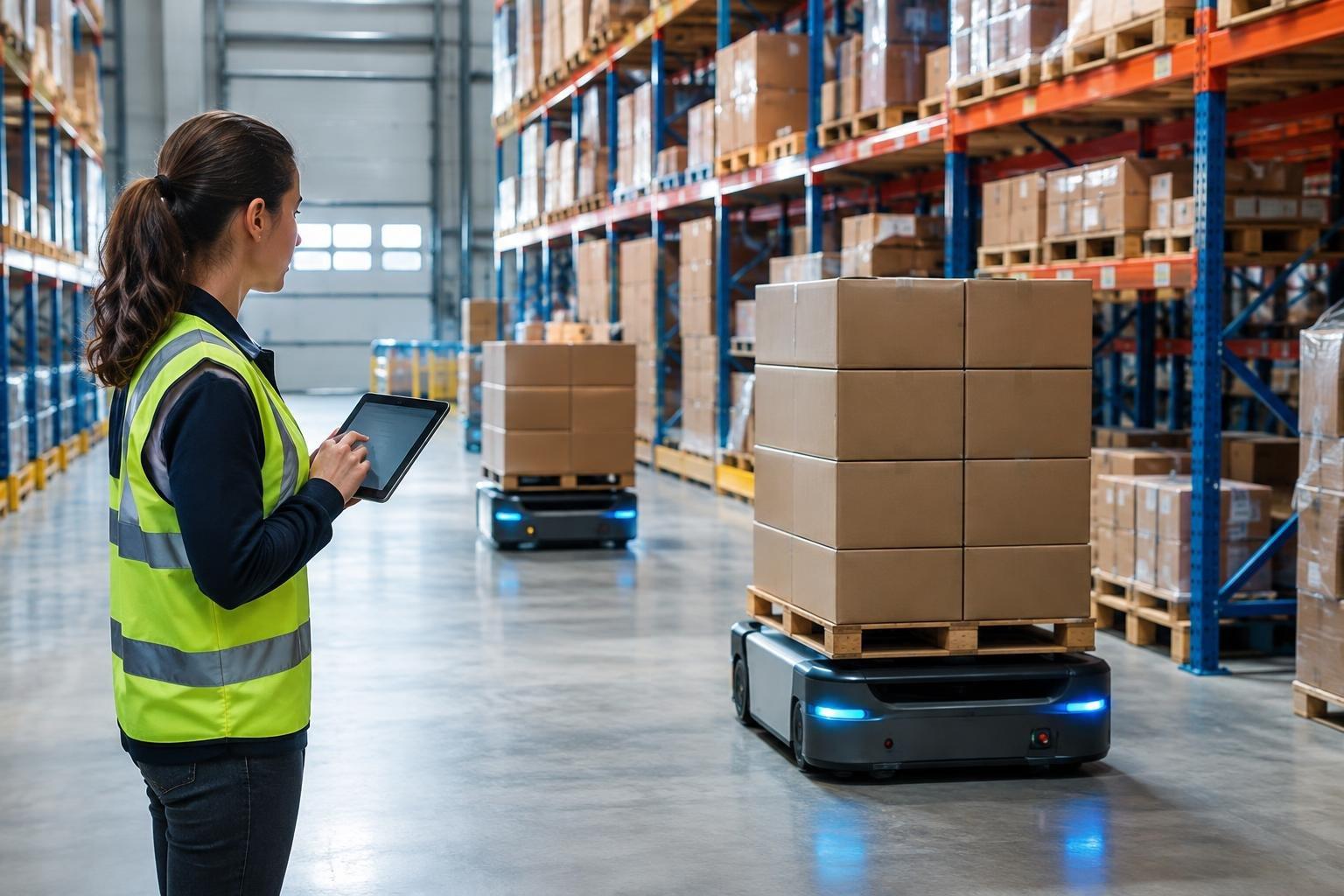
For warehouse leaders, robotics can seem like a major investment with a long list of equipment choices. The better starting point is not a particular robot. It is a clear view of where movement, picking, or internal logistics is creating avoidable effort and limiting capacity.
Begin with the work between processes
Material movement is often the most practical entry point. Employees may spend hours transporting pallets, totes, cartons, or completed orders between receiving, storage, picking, packing, and shipping. Autonomous mobile robots, automated guided vehicles, and robotic tuggers can handle defined routes while employees focus on decisions, exceptions, and customer-facing work.
Look for routes that are predictable, frequent, and physically demanding. A useful assessment should document travel distance, load types, handoff points, congestion, floor conditions, and the times when demand changes. Robotics works best when the operating environment is understood before equipment is selected.
Use robots to support picking, not complicate it
Picking support can take several forms. A mobile robot may bring shelves or totes to a picker, follow a worker through a zone, or carry completed picks to packing. Robotic arms may assist with case handling or piece picking where product presentation is consistent. The right choice depends on product dimensions, weight, packaging, order profiles, and the accuracy of current location data.
Pay close attention to the worker experience. A system that reduces walking but creates awkward replenishment steps, difficult exception handling, or frequent stops will not deliver its expected value. Involve experienced pickers and supervisors early; they can identify practical constraints that process maps often miss.
Consider inventory handling beyond the storage rack
Robotics can also support cycle counting, replenishment, put-away, and inventory transfers. Mobile systems equipped with scanners or cameras can travel through aisles, capture location information, and flag discrepancies for review. Automated storage and retrieval systems may be appropriate where space is limited, inventory is highly structured, and throughput is steady.
Before pursuing these options, confirm that item identification, location labeling, and inventory records are reliable. Robotics can move materials efficiently, but it cannot compensate for unclear ownership, inconsistent master data, or poorly defined replenishment rules.
Build the operating plan around the technology
A successful robotics initiative includes traffic rules, charging or battery procedures, maintenance responsibilities, safety controls, and a plan for exceptions. Define what happens when a robot encounters an obstruction, a damaged carton, a missing item, or a priority order. Also determine how supervisors will monitor performance and how employees will be trained to work alongside the equipment.
Start with one clearly bounded workflow where the problem, handoffs, and expected operating changes can be described in practical terms. Then compare results such as travel time, throughput, order accuracy, injury exposure, and schedule adherence. If you are evaluating robotics for your warehouse, map your highest-friction internal movements first and use that view to define the right next conversation with an experienced integrator.

Leave a Reply
You must be logged in to post a comment.